
Field Notes
Plain-language notes on how plants work and how to read what they’re telling you. Care, plant science, and the sensors that measure it all.
-

No. 24Classroom
A homeschool plant science unit: four weeks of experiments with real data
This four-week homeschool botany unit runs on one question, a few pots per condition and a daily notebook, with kitchen-table materials and jobs scaled to every age at the table.
8 min read
-

No. 23Classroom
How to graph plant growth data: line graphs, averages and error bars
Three pots per treatment and a page of heights is enough for an honest graph. Here is how to pick the graph, summarize the plants, show the spread and avoid errors that make a result look stronger than it is.
8 min read
-

No. 22Classroom
Teaching the plant life cycle with Fast Plants: seed to seed in about 40 days
Fast Plants go from seed to harvestable seed in about 40 days under lights. Here is the timeline by day, what students measure at each stage, and how to pollinate, harvest and plant the next generation.
7 min read
-

No. 21Classroom
How to set up a classroom grow light for seedlings: height, hours and DLI
Seedlings on a windowsill tend to grow tall and thin. Here is how high to hang a grow light, how long to run it, how to check it and how to keep cords and water apart.
8 min read
-

No. 20Plant science
How to measure plant growth: height, leaf area, biomass and growth rate
Height is the easiest growth number to take and the easiest to misread. Leaf area, dry mass and relative growth rate show how much plant you grew, and how fast for its size.
8 min read
-

No. 19Classroom
How to measure the rate of photosynthesis in class: the floating leaf disk lab and two more
Leaf disks that sink, then rise as they make oxygen, turn photosynthesis into a count students can graph. Here is the full method, two other ways to measure it, and how to read the numbers.
8 min read
-

No. 18Comparisons
How to choose a hygrometer for plants and check its accuracy
A humidity meter reports the air at its own sensor, at its own temperature. Here is what the specs mean, where to put it, and how a spoonful of salt tells you whether it reads true.
8 min read
-

No. 17Classroom
Plant science fair project ideas: 11 experiments with real measurements
A strong plant project changes one thing, measures the result in numbers and repeats it on enough plants. These ideas do, and the rules section covers what to check before the first seed goes in.
8 min read
-

No. 16Comparisons
How to choose a pH and EC meter for plants: pens, combo meters and soil probes
The extra decimal on the display isn’t accuracy, and the pH electrode wears out long before the meter. Here is what to read on a spec sheet and what extension specialists say growers need.
8 min read
-

No. 15Classroom
Six classroom plant experiments with sensors that produce real data
Each one runs for days or weeks and gives students numbers worth graphing. All six work with a ruler, a kitchen scale and a thermometer, and sensors slot in where you have them.
8 min read
-

No. 14Comparisons
PAR meter vs. lux meter for plants: how to choose a PPFD meter
A lux meter tells you how bright a spot looks to you. A PAR meter counts the photons a plant can use. Here is when each one is enough, and which specs matter.
8 min read
-

No. 13Classroom
How to build a plant science lesson plan around real data
NGSS asks middle schoolers to explain growth with evidence, including their own experiments. Here is how to turn one good question into a three-week unit with a fair test, a daily data sheet and a written explanation.
8 min read
-
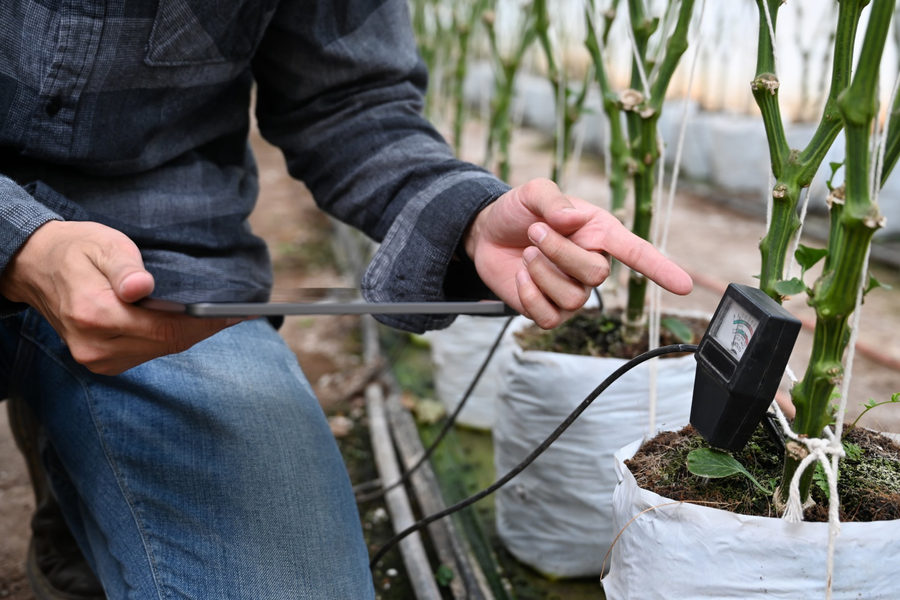
No. 12Plant tech
How to calibrate a soil moisture sensor for your potting mix
Raw counts and generic curves don’t know your mix. Weighed water does. Here is the gravimetric method, the math behind it, and where the errors creep in.
9 min read
-

No. 11Plant tech
How to measure plant water stress: leaf temperature, stem diameter and sap flow
Soil sensors measure the root zone. Plant-based sensors measure the plant’s response: warmer leaves, a shrinking trunk, slower sap and a stronger pull on its water.
8 min read
-

No. 10Plant tech
EC and pH for plants: what the numbers mean and how to measure them
EC tells you how much dissolved salt, mostly fertilizer, is around the roots. pH affects how much of it the roots can use. Both depend on how you sample, so here is how to get a reading you can trust.
8 min read
-

No. 09Comparisons
Plant sensors compared: what each one measures and how accurate it is
A datasheet tells you how good the chip is on the bench. Placement, calibration and the light source decide how good your reading is. Here are the numbers for each sensor type.
7 min read
-
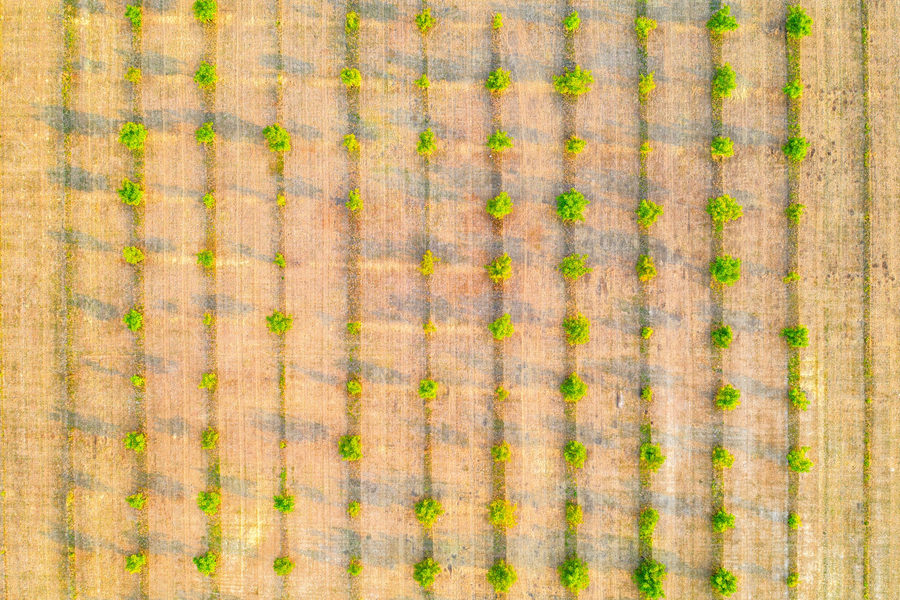
No. 08Plant tech
What is NDVI? What plant-health cameras actually measure
Satellites, drones and plant cameras all report NDVI. It compares two kinds of reflected light, and it says more about how much green leaf is in view than about what is wrong with a plant.
8 min read
-

No. 07Plant tech
What do soil moisture readings mean? Volumetric water content, explained
A volumetric moisture reading is the share of the soil’s volume that is water. Whether that is wet or dry depends on the soil, the pot and how tightly the water is held.
8 min read
-

No. 06Plant care
Why are my plant’s leaves turning yellow?
Old leaves or new? Veins green or yellow? Speckles or a solid wash? The pattern narrows the cause down fast, and each cause has a different fix.
6 min read
-

No. 05Plant science
What is VPD? Vapor pressure deficit for plants, explained
Relative humidity tells you how full the air is. VPD tells you how hard that air pulls water out of your plants, and you can work it out with a thermometer and a hygrometer.
7 min read
-

No. 04Plant care
Overwatering vs. underwatering: how to tell which one it is
Both problems make plants wilt and lose leaves, because both leave the roots unable to deliver water. The soil, the stems and the roots tell them apart.
6 min read
-

No. 03Comparisons
Capacitive vs. resistive soil moisture sensors: what’s the difference?
Both kinds of probe give you a number. Whether that number tracks water or salt is the difference that matters.
7 min read
-

No. 02Plant science
How much light does a houseplant need? Lux, PPFD and DLI, explained
Your eyes are a poor light meter, and a few feet from a window can mean several times less light. Here is what the numbers mean and how to get them.
7 min read
-

No. 01Plant care
How often should you water houseplants?
There is no right number of days. Here is what changes how fast a pot dries out, and the simple checks that tell you when a plant actually needs water.
6 min read
Join the waitlist
New field notes by email, and first word when the hardware goes live.
By joining, you agree to get email updates from Terrathink. Unsubscribe anytime. Privacy policy